Most people who have been defrauded say the same thing. They did not know where to start. The money was gone, the trail felt cold, and every channel they tried hit a wall. This Pay-Recovery.com review looks at exactly how the agency structures its recovery process and what a client can realistically expect from the moment they first reach out.
Pay-Recovery is a specialist asset recovery agency headquartered in London. It serves fraud victims across multiple countries and has built its entire operation around a process that moves a case from intake to resolution without leaving clients guessing at any stage. The platform has recovered over $142,000 in total assets and has served more than 5,000 clients. That track record and the structure behind it are both worth understanding before making any decisions about who to trust with a case.
What separates a reliable recovery agency from an unreliable one often comes down to process. Anyone can claim they recovered stolen assets. What matters is whether there is a clear, repeatable system behind that claim and whether clients are kept informed throughout every step of it. That is what this article looks at in detail.
What Happens When a Client First Reaches Out?
The process begins with a consultation request. Clients submit their details through the platform’s contact form, and from there, the agency begins evaluating the case before any formal engagement takes place. This is not just an intake procedure. It is a genuine assessment of what happened, what evidence exists, and what kind of strategy makes the most sense given the specifics of the situation.
In this Pay-Recovery.com review, it is worth noting that the agency does not apply a standard template to every case. The type of fraud involved, the amount lost, and the jurisdictions connected to the case all shape what recovery approach gets deployed. A case involving digital assets and one involving forex fraud are handled through different channels because they require different forensic tools and different legal pathways. That distinction matters because it means clients are not being pushed through a one-size process that may not actually suit their circumstances.
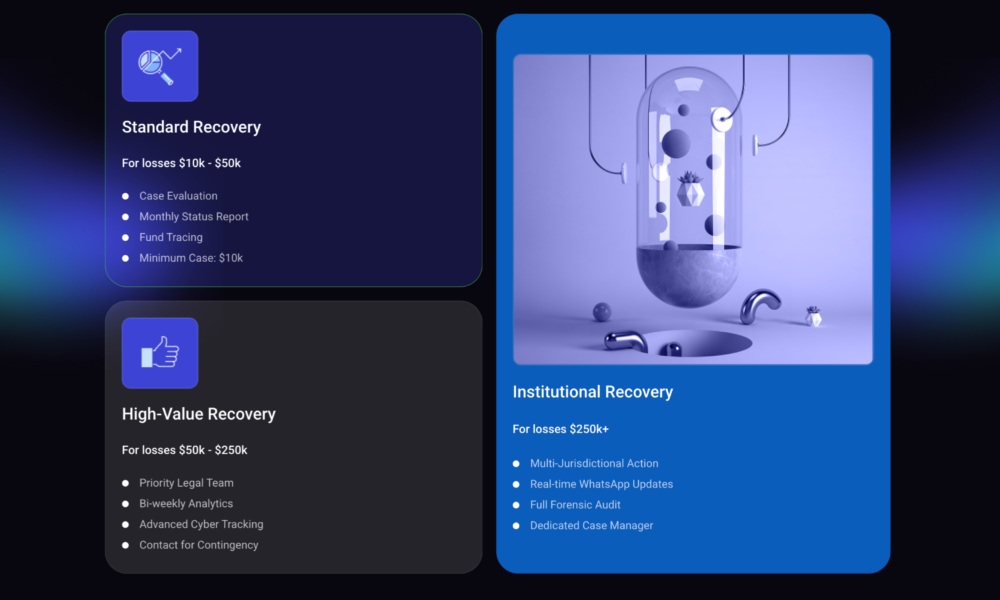
A few more insights in this Pay-Recovery.com review are that the eligibility stage also helps clients understand which plan tier suits their situation. With a minimum case value of $10,000 under the Standard Recovery plan, the agency is upfront about the scope of cases it can take on effectively. That transparency from the start sets a consistent tone for the rest of the process. It signals to clients that they are dealing with an agency that is straightforward rather than one that will agree to anything just to bring in new business.
How Does the Agency Build a Case Strategy?
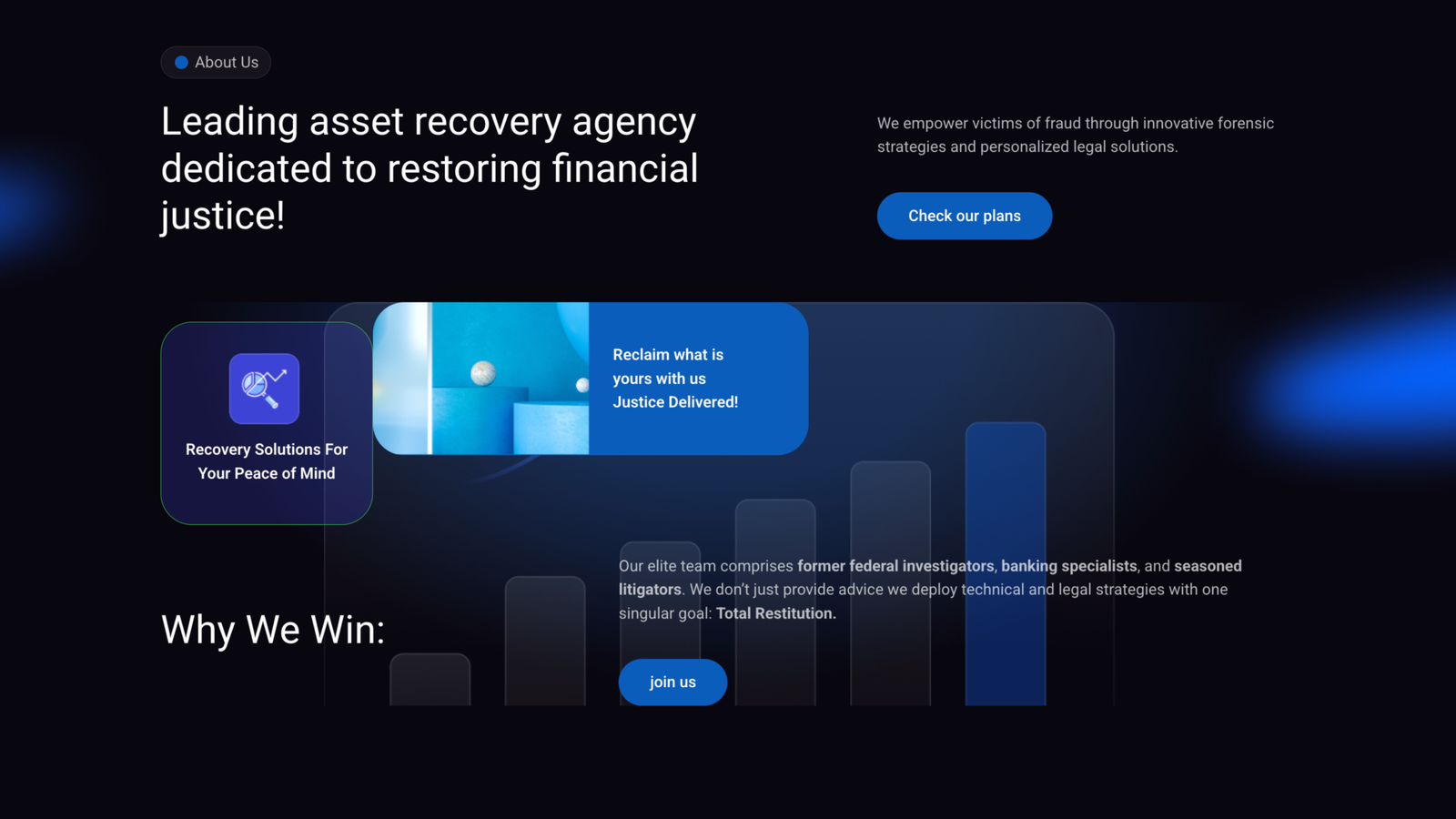
Once a case is accepted, the agency moves into active strategy development. This is where its interdisciplinary team structure matters most. Former federal investigators, banking specialists, and experienced litigators work together from the beginning, which means the legal, forensic, and investigative dimensions of a case are addressed at the same time rather than in isolation.
A key point in this Pay-Recovery.com review is how deliberately each step in the strategy phase is sequenced. Here is a look at how the agency builds and executes its approach:
- Case intake and evidence review: All available documentation is collected and assessed, including transaction records, communications, and any platform data connected to the fraud
- Fraud profile analysis: The agency maps out the type of scheme involved and traces how funds moved after leaving the victim’s control
- Forensic tool deployment: Bank-grade software and proprietary tracking systems are used to follow assets across wallets, accounts, and jurisdictions
- OSINT investigation: Open Source Intelligence methods are applied to identify the real individuals or entities operating behind anonymous fraud structures
How Does the Agency Move From Investigation Into Active Recovery?
It is worth emphasizing in this Pay-Recovery.com review that the transition from investigation to legal action is where many agencies lose momentum. Pay-Recovery approaches this differently. Once the forensic phase produces usable findings, the legal team moves immediately rather than waiting for a separate review period to conclude.
The type of legal action taken depends entirely on what the investigation uncovered. In some cases, that means engaging financial institutions directly to freeze accounts. In others, it means multi-jurisdictional legal proceedings that follow the money across borders. The agency’s contact points across the UK, Canada, Australia, Italy, and Spain support this kind of international pursuit without significant delays or referrals to external parties.
It must be noted in this Pay-Recovery.com review that this active, adaptive approach is especially important in cross-border cases. Fraud schemes that involve multiple countries are intentionally built to be difficult to pursue. An agency that can shift its legal strategy as new information emerges is far better positioned to make progress than one that commits to a single path at the start and sticks with it regardless of what the evidence shows.
What Does the Client Update Schedule Look Like Across Plan Tiers?
A key point in this Pay-Recovery.com review is that communication is one of the things fraud victims consistently say matters most during a case. Knowing what is happening, even when progress is incremental, makes a difficult process significantly more manageable. Here is how the agency structures client reporting across its three plan tiers:
- Standard Recovery clients receive a monthly status report covering case progress, tracing updates, and confirmed next steps
- High-Value Recovery clients receive bi-weekly analytics reports with more detailed breakdowns of investigative activity and legal developments as they happen
- Institutional Recovery clients receive real-time WhatsApp updates and have access to a dedicated case manager who handles all communications personally throughout the case
As can be seen in this Pay-Recovery.com review, the reporting structure scales directly with case complexity. Higher-value cases receive more frequent updates because they typically involve more moving parts, more jurisdictions, and more stakeholders who need to remain informed at every stage of the process.
What Do Clients Say About Going Through the Process?
Client feedback on the process itself is consistent across the testimonials featured on the platform. One client notes that the agency froze a scammer’s account within two weeks of being engaged. Another describes the team using blockchain analysis to assist law enforcement directly. A third recovered $50,000 after police had already exhausted their options with no result.
A few more insights in this Pay-Recovery.com review include what clients tend to highlight beyond the outcome itself. Words like transparent, professional, and patient appear repeatedly across the feedback. For fraud victims who have often already felt dismissed by banks or overwhelmed by the technical complexity of their situation, consistent and clear communication from the agency is not a minor detail. It is a significant part of what makes the experience meaningfully different from what they encountered elsewhere.
The agency’s stated stance of zero false promises also carries real weight with clients. Several testimonials mention that the team was honest about what was realistic from the outset, which helped manage expectations and reduce the anxiety of not knowing what to expect at each stage of the process. That kind of honesty is something clients remember long after the case is resolved.
One client specifically credits the agency for recovering 95% of their total investment loss, calling it the best decision they made. Another describes the team as relentless. These are strong words, and they come from people describing a process that actually produced results. That consistency in feedback across different case types and loss amounts says something meaningful about how the agency operates day to day, rather than just in standout cases.

Conclusion
This Pay-Recovery.com review concludes with a clear read of the agency’s process. It is structured, consistently communicated, and built to handle the kind of complex fraud cases that most standard firms simply cannot effectively pursue. From the initial consultation through to the legal action phase, each stage is handled by specialists who are actively working on the case rather than advising from a distance.
For fraud victims who have already tried other avenues without success, Pay-Recovery offers a process that is defined, repeatable, and backed by a team with real technical and legal capacity. The structure is there, the communication is consistent, and the outcomes reflected in client feedback show that the process delivers when it counts.