The term soutaipasu has gained attention across technical discussions, educational platforms, and online communities. Many people searching for this word want a clear explanation that goes beyond a short definition. They want to know what it means, where it is used, why it matters, and how it applies in real situations.
This guide is written to answer those questions in depth. Whether you encountered the term while learning programming, browsing Japanese technical content, or exploring modern digital language, this article breaks it down in a clear, practical, and beginner-friendly way. By the end, you’ll understand the concept, its benefits, its limitations, and how it’s applied in everyday scenarios.
What Does soutaipasu Mean?
At its core, soutaipasu is a Japanese term that translates to “relative path.” It describes a way of pointing to a file or location based on the current position rather than starting from a fixed root location.
In simple terms, instead of saying exactly where something is from the beginning, it says how to reach it from where you are now. This approach is widely used in computing, especially in file systems, web development, and software projects.
The opposite concept is an absolute path, which always starts from a fixed root location. The relative approach is more flexible and adaptable, which explains why it is so commonly used.
How soutaipasu Works in Practice
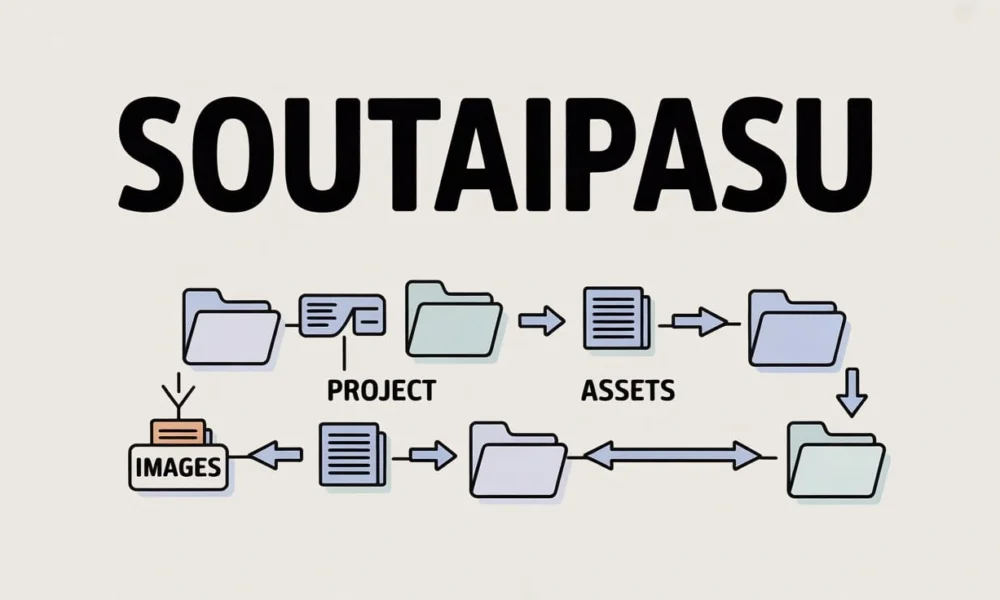
To understand soutaipasu, imagine navigating folders on your computer.
If you are already inside a project folder and want to access an image inside a subfolder, you don’t need to describe the entire path from the drive root. You simply describe how to reach it from your current location.
This relative approach allows systems to locate files efficiently without depending on fixed directory structures. If the entire project moves to a new location, the internal connections still work as long as the relative structure remains unchanged.
This is one of the main reasons developers and system designers rely heavily on this method.
Why soutaipasu Is Important
The importance of soutaipasu goes beyond convenience. It directly affects how reliable, flexible, and maintainable digital projects are.
Key Benefits
- Portability: Projects can be moved between environments without breaking internal links.
- Flexibility: Files remain connected even if the root location changes.
- Cleaner structure: Paths are shorter and easier to understand.
- Team collaboration: Different users can work on the same project without path conflicts.
Because of these advantages, this approach is taught early in technical education and used widely in professional environments.
Common Challenges and Limitations
Despite its usefulness, soutaipasu is not without challenges.
One common issue is losing track of the current location. If a project becomes deeply nested, relative references can become confusing. A small mistake in directory navigation may cause files not to load correctly.
Another challenge appears when projects are poorly organized. Relative references depend on a logical structure, so messy folder hierarchies can reduce their effectiveness.
Finally, beginners often confuse relative and absolute references, leading to errors. This is why understanding the concept thoroughly is essential before applying it in real projects.
Real-World Examples of soutaipasu
Web Development
In website projects, developers often link stylesheets, scripts, and images using soutaipasu. This ensures the site works the same way on a local computer, a test server, or a live hosting environment.
Software Projects
Many programming languages use relative references to load configuration files, libraries, or assets. This allows the same codebase to run on different machines without modification.
Education and Training
Technical courses frequently introduce this concept early because it helps learners understand how systems locate and organize data. Mastering it builds a strong foundation for more advanced topics.
Step-by-Step Guide to Using soutaipasu
Step 1: Identify Your Current Location
Before creating a relative reference, know exactly where you are within the folder structure. File explorers and development tools make this easier.
Step 2: Understand Directory Navigation
Learn how to move within folders logically. Going deeper or moving up one level is a fundamental skill when working with relative paths.
Step 3: Keep Folder Structures Organized
A clean structure makes relative references intuitive and reduces errors.
Step 4: Test Frequently
Check that files load correctly after changes. Early testing prevents small mistakes from becoming larger problems.
How soutaipasu Is Used Beyond Technology
While its main usage is technical, soutaipasu has also appeared in broader digital conversations. Some people use it metaphorically to describe situations where outcomes depend on context rather than fixed rules.
This extended usage reflects how technical language often influences modern communication. However, its most reliable and widely accepted meaning remains rooted in computing and system navigation.
Common Misunderstandings
Many people assume soutaipasu refers to a product, service, or platform. It does not. It is a concept, not a brand.
Others believe it is only relevant to advanced professionals. In reality, even beginners benefit from understanding it early, as it simplifies learning and reduces confusion later.
Clarifying these misunderstandings helps users apply the concept correctly and confidently.
Frequently Asked Questions
What is soutaipasu in simple terms?
It means referencing a file or location based on your current position rather than a fixed starting point.
Is soutaipasu only used in programming?
It is mainly used in technical fields, but the idea can be applied conceptually in other areas.
Why do developers prefer relative paths?
They make projects easier to move, share, and maintain without breaking internal links.
Can beginners learn soutaipasu easily?
Yes. With basic folder navigation knowledge, anyone can understand and use it effectively.
What happens if the folder structure changes?
As long as the relative structure stays the same, references will continue to work correctly.
Conclusion
Understanding soutaipasu is a valuable skill for anyone working with digital systems. It promotes flexibility, clarity, and efficiency across projects of all sizes. From websites and software applications to educational environments, its role is both practical and foundational.
By learning how relative references work, recognizing their benefits, and avoiding common mistakes, users can build more reliable and adaptable systems. In a world where digital environments constantly change, this concept remains a powerful and relevant tool.
Leave a Reply