
Tech
thehrwp: Complete Guide to a Modern HR Platform

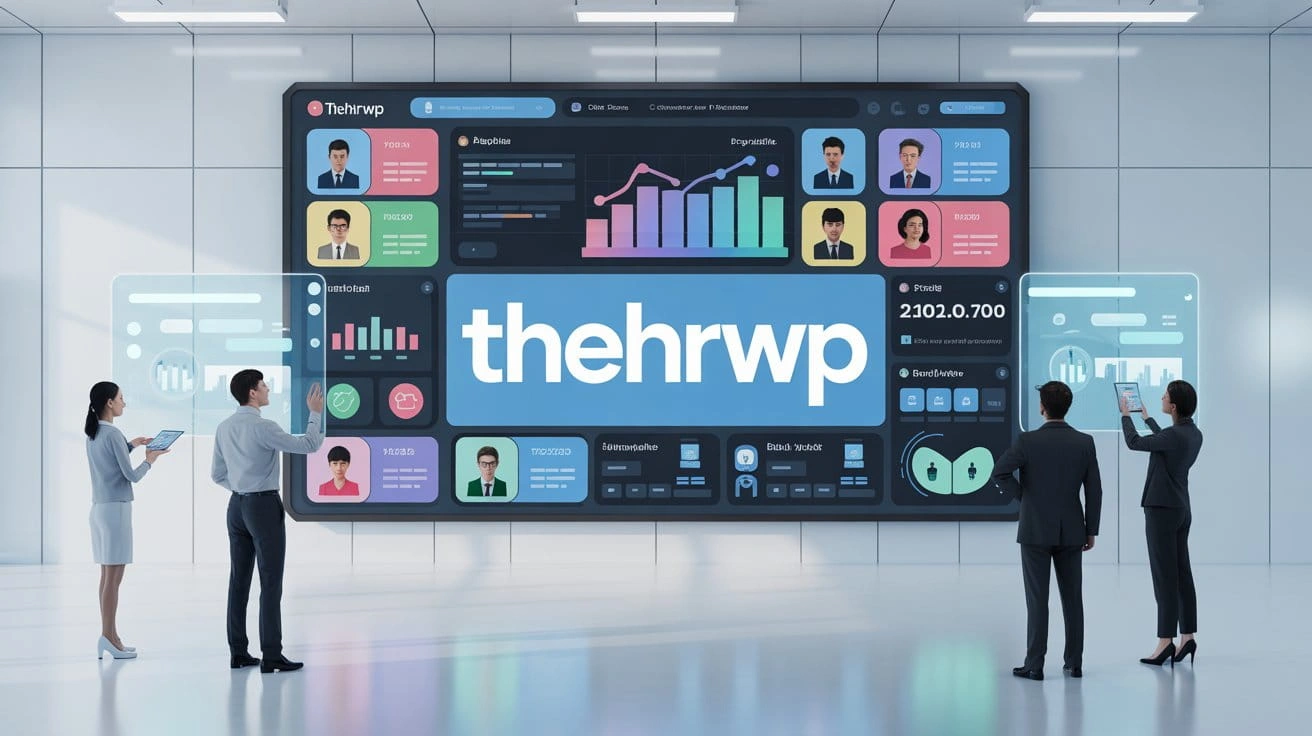
Digital transformation has reshaped how organizations manage employees, data, and workplace operations. Traditional human resource systems often rely on spreadsheets, manual records, and multiple disconnected tools. These outdated processes can slow productivity and make it difficult for HR teams to manage employee information efficiently. In response to these challenges, modern workforce platforms have emerged. One concept gaining attention online is thehrwp, which is often discussed in connection with digital HR systems and workforce management technology.
Many organizations search for information about this term because it relates to modern HR platforms designed to streamline recruitment, payroll, performance management, and employee engagement. Instead of using separate tools for each HR function, a unified platform allows companies to manage everything from a single system.
Understanding how thehrwp works can help organizations improve productivity, reduce administrative workload, and build a more efficient workforce management strategy. This guide explains the meaning of thehrwp, its key features, advantages, challenges, and real-world use cases.
Understanding thehrwp in the Modern Workplace
The term thehrwp is commonly associated with digital workforce management platforms designed to centralize HR operations. These systems allow organizations to manage employee information, hiring processes, payroll tasks, and performance tracking within one unified environment.
Instead of relying on multiple software solutions, thehrwp platforms integrate HR functions into a single system. This approach reduces complexity and improves coordination between departments.
Cloud technology plays a major role in these platforms. Because the system operates online, HR teams can access workforce data securely from different locations. Managers and employees can also interact with the system through self-service portals.
For example, employees may update personal information, submit leave requests, or review performance feedback directly through the platform. At the same time, HR professionals can monitor workforce trends, analyze productivity data, and generate reports.
By combining these capabilities, thehrwp helps organizations manage their workforce more effectively.
Core Functions of thehrwp Platforms
Modern workforce platforms inspired by the thehrwp concept typically include several integrated modules. These modules support the entire employee lifecycle from recruitment to performance evaluation.
Recruitment and Hiring
Recruitment tools allow HR teams to create job listings, track applications, and manage candidate evaluations. Some systems also provide automated resume screening, which helps recruiters identify suitable candidates faster.
Onboarding and Employee Setup
After hiring a candidate, onboarding features guide new employees through the initial setup process. Digital forms, training schedules, and policy documents can all be managed within the system.
This organized approach ensures that new hires start their roles with clear instructions and the resources they need.
Payroll and Compensation Management
Payroll management is another essential component. The platform calculates salaries, deductions, and bonuses while maintaining accurate records of payments.
Automated payroll reduces the risk of human error and ensures employees are paid correctly and on time.
Performance and Productivity Tracking
Managers can set goals, review employee progress, and conduct evaluations through the platform. Performance dashboards provide insights into productivity levels across teams and departments.
Regular feedback tools encourage continuous improvement and help employees stay aligned with organizational goals.
Workforce Analytics
Data analytics tools transform HR data into useful insights. Reports may show hiring trends, employee retention rates, or productivity levels across different teams.
These insights help leaders make strategic decisions about hiring, training, and workforce development.
Key Benefits of thehrwp for Organizations
Adopting thehrwp platforms can bring several advantages to businesses seeking more efficient HR management.
Improved Efficiency and Reduced Manual Work
One of the most significant advantages is automation. Routine tasks such as attendance tracking, payroll calculations, and document management can be completed automatically.
This allows HR teams to focus on strategic planning instead of administrative work.
Centralized Workforce Data
All employee information is stored in a single database, making it easier to access and manage. HR professionals can quickly retrieve records, update information, and generate reports without searching through multiple systems.
Better Decision-Making
Thehrwp platforms often include analytics dashboards that display workforce data in real time. Managers can analyze patterns such as employee turnover, training needs, or recruitment performance.
These insights support informed decisions that strengthen the organization’s workforce strategy.
Enhanced Employee Experience
Employee self-service features allow staff members to manage their own information, request leave, and review payroll details.
This convenience improves transparency and creates a smoother experience for employees.
Scalability for Growing Companies
As businesses expand, workforce management becomes more complex. Cloud-based platforms based on thehrwp model can easily scale to support additional employees and departments.
Challenges Organizations May Face
Despite its advantages, implementing thehrwp platforms can present certain challenges.
Integration with Existing Systems
Many organizations already use accounting software, communication tools, and project management platforms. Integrating these systems with a new HR platform may require technical adjustments.
Training and User Adoption
Introducing a new system requires employees and managers to learn new workflows. Without proper training, some team members may struggle to adopt the platform effectively.
Data Security and Privacy
HR systems store sensitive information such as employee personal data and salary details. Organizations must ensure that strong security measures are in place to protect this information.
Data Migration Complexity
When switching from manual records or legacy software, transferring employee data into a new system can take time. Careful planning is necessary to maintain accuracy during the migration process.
Real-World Examples of thehrwp in Action
Organizations across various industries use platforms similar to thehrwp to improve workforce management.
Technology Startup Example
A small technology startup initially managed HR tasks through spreadsheets and email communication. As the company grew, these methods became inefficient.
After adopting a centralized HR platform, the company automated recruitment workflows and stored employee records in a single digital system. This reduced administrative work and allowed managers to focus on building their teams.
Manufacturing Company Example
A manufacturing company operating across multiple locations needed a better way to track employee attendance, payroll, and performance.
By implementing a workforce management platform, managers could monitor employee data from different facilities through one system. This improved coordination between departments and reduced reporting errors.
Remote Workforce Example
Companies with remote employees often rely on digital HR platforms to maintain communication and manage workforce activities.
Through thehrwp systems, remote workers can access documents, request leave, and receive performance feedback without visiting an office. This flexibility supports modern hybrid work environments.
How to Implement thehrwp in an Organization
Successful adoption of thehrwp platforms requires a structured implementation process.
Step 1: Identify HR Challenges
Organizations should begin by reviewing their current HR processes. Identifying inefficiencies helps determine which features are most important in a new system.
Step 2: Define System Requirements
Companies must decide which functions they need, such as recruitment tools, payroll automation, or performance management features.
Step 3: Select the Right Platform
Choosing a platform that supports future growth is essential. The system should integrate with existing business tools and provide strong security features.
Step 4: Prepare Data Migration
Before launching the platform, HR teams should organize employee records and ensure all information is accurate.
Step 5: Provide Training for Employees
Training sessions help employees understand how to use the system effectively. Clear instructions encourage adoption across the organization.
Step 6: Monitor and Improve
After implementation, organizations should regularly review system performance and adjust workflows when necessary.
Technologies Supporting thehrwp Platforms
Several modern technologies make platforms based on the thehrwp concept possible.
Cloud computing allows organizations to store workforce data securely while maintaining remote accessibility. Artificial intelligence helps analyze workforce trends and predict hiring needs.
Automation tools handle repetitive tasks such as payroll calculations and attendance tracking. Data analytics dashboards provide visual insights into workforce performance and employee engagement.
Together, these technologies create a powerful digital environment for managing human resources.
Frequently Asked Questions
What is thehrwp?
Thehrwp refers to a digital workforce management concept that centralizes HR functions such as recruitment, payroll, performance tracking, and employee data management.
How does thehrwp improve HR management?
It automates routine processes, organizes workforce data in one system, and provides insights that help organizations make better decisions.
Can small businesses use thehrwp platforms?
Yes. Many workforce management systems are designed to support organizations of all sizes and can scale as a company grows.
Does thehrwp support remote employees?
Yes. Because these systems operate through cloud technology, employees and managers can access HR tools from different locations.
Is thehrwp secure?
Most modern HR platforms include security features such as encryption, access control, and data protection measures to safeguard employee information.
Conclusion
Thehrwp represents a modern approach to workforce management that combines automation, centralized data, and advanced analytics. By integrating recruitment, payroll, employee management, and performance tracking into one system, organizations can operate more efficiently and make better strategic decisions.
Although implementing a new platform requires careful planning and training, the long-term benefits are significant. Businesses gain improved productivity, more accurate workforce data, and a better overall employee experience.
As organizations continue to adopt digital workplace strategies, platforms built around thehrwp concept will play an increasingly important role in shaping the future of human resource management.


Remember scrambling out the door, wondering if you left the lights on? Or waking up at 2 a.m. convinced you forgot to lock the front door? These small moments of uncertainty add up. That’s exactly where home automation steps in—quietly handling the details so you don’t have to.
From smart thermostats to voice-controlled lighting, more households are discovering that a connected home isn’t just a luxury. It’s a genuinely practical upgrade for everyday life.
The Convenience Factor
Busy families know the drill: mornings are chaotic, evenings are rushed, and the to-do list never really ends. Home automation takes repetitive tasks off your plate entirely.
Imagine your coffee maker starting up before your alarm goes off. Your blinds opening gradually as the sun rises. Your front door unlocking automatically when you pull into the driveway. None of this requires any effort on your part once it’s set up.
Smart home devices like Amazon Echo or Google Nest let you control appliances, lights, and locks through simple voice commands or a smartphone app. It’s the kind of convenience that doesn’t feel flashy—it just makes your day run more smoothly.
Energy Efficiency and Savings
One of the most tangible benefits of home automation is the impact it has on energy bills. Smart thermostats, for example, learn your schedule over time and adjust heating and cooling accordingly. They stop wasting energy on an empty house and ensure your home is comfortable when you actually need it.
Automated lighting systems take this further. Lights that dim when natural sunlight is sufficient, or switch off automatically when a room is empty, can meaningfully reduce electricity consumption over time.
According to the U.S. Department of Energy, heating and cooling account for nearly half of a home’s energy use. Even modest automation in this area can translate into real, ongoing savings—without any sacrifice in comfort.
Safety and Peace of Mind
Security is where home automation really earns its keep. Smart doorbells with cameras let you see who’s at the door from anywhere in the world. Motion-sensing lights deter would-be intruders. Smart locks let you grant access remotely and track who comes and goes.
For parents of young children, connected smoke detectors and leak sensors offer an extra layer of protection that traditional devices can’t match. You get an alert on your phone the moment something is detected—even if you’re at the office or traveling.
There’s also something to be said for the emotional value here. Knowing your home is being monitored and that you can check in at any time provides a kind of quiet reassurance that’s hard to put a price on.
Getting Started
The good news? You don’t need to overhaul your entire home to get started with home automation. Most people begin with one or two devices and expand from there.
A smart speaker is an easy entry point—it connects with a wide range of other devices and gets you comfortable with voice control. From there, a smart thermostat or a set of smart bulbs can make a noticeable difference without requiring any complicated installation.
Here are a few practical first steps:
- Start small: Pick one area of your home or one routine to automate first.
- Choose compatible devices: Look for products that work within the same ecosystem (Google Home, Amazon Alexa, or Apple HomeKit) to avoid connectivity headaches.
- Set it and forget it: Once your devices are configured, let them do their job. The less you have to think about it, the better.
The learning curve is gentler than most people expect, and the payoff becomes obvious quickly.
A Smarter Home Starts With Small Steps
Home automation isn’t about turning your house into something out of a sci-fi film. It’s about making the place where you spend most of your time work better for you—saving energy, keeping your family safer, and freeing up mental bandwidth for the things that actually matter.
Start with what frustrates you most about your daily routine. There’s a good chance home automation already has a solution for it.


The roar of the crowd, the tension of a last-minute shot, the agony of a missed call – sports are a powerful force in college life. But for a growing number of students, the thrill of the game extends far beyond the emotional rollercoaster. They’re diving deep into the intricate world of player statistics, transforming raw data into insightful data science projects. From predicting game outcomes to optimizing player performance, college students are proving that the intersection of sports and data science is a fertile ground for innovation and learning.
In today’s data-rich world, almost every action on the field or court is meticulously recorded and analyzed. This treasure trove of information – everything from individual player shot charts and passing accuracy to team-wide defensive efficiency ratings – provides an unparalleled opportunity for aspiring data scientists to hone their skills. Imagine analyzing years of NBA player movement data to identify optimal offensive plays, or using historical baseball statistics to predict a rookie’s potential career trajectory. The possibilities are truly endless, limited only by creativity and analytical prowess.
Many students embarking on these exciting projects often find themselves grappling with complex datasets and intricate statistical models. It’s a challenging but rewarding journey, and sometimes, a little extra support can go a long way. For those needing a helping hand with data cleaning, model validation, or even just understanding the underlying mathematical concepts, resources like write my homework services can be invaluable. They offer assistance that ensures students can focus on the analytical insights rather than getting bogged down in the mechanics of data manipulation.
The Playbook: Popular Data Science Projects Using Player Stats
Let’s explore some of the fascinating ways college students are leveraging player statistics for their data science endeavors:
- Predicting Game Outcomes: This is arguably one of the most popular and captivating applications. Students use machine learning algorithms (like logistic regression, support vector machines, or even neural networks) trained on historical game data, including player statistics, team performance metrics, and even coaching strategies, to predict the winner of upcoming matches. This involves carefully selecting features, engineering new ones (e.g., “rest days since last game”), and rigorously evaluating model performance.
- Player Performance Analysis and Optimization: Beyond just winning or losing, students are delving into individual player performance. This could involve identifying key factors that contribute to a player’s success in specific situations (e.g., a basketball player’s shooting percentage from different areas of the court), or even developing models to recommend training regimens based on performance gaps. Imagine a project that analyzes a soccer player’s passing accuracy under pressure and suggests drills to improve it.
- Fantasy Sports Dominance: For many, fantasy sports are more than just a hobby; they’re a passion. Data-savvy students are building sophisticated models to optimize their fantasy team selections, predicting player performance fluctuations, injury risks, and breakout candidates. This often involves time-series analysis and understanding how various factors influence a player’s output over a season.
- Injury Prediction and Prevention: A critical area where data science can make a real-world impact is in player health. By analyzing vast datasets of player movement, training load, and historical injury data, students are developing predictive models to identify players at higher risk of injury. This information could then be used by teams to adjust training schedules or provide targeted preventative care.
- Scouting and Talent Identification: Forget the traditional eye test! Data science is revolutionizing how teams scout for new talent. College projects often involve creating models that identify undervalued players based on their statistical profiles, or predicting how a player’s skills might translate from college to professional leagues. This can uncover hidden gems that traditional scouting methods might miss.
The Data Deluge: Where to Find Player Stats
A crucial first step for any data science project is acquiring reliable and comprehensive data. Fortunately, the world of sports offers a wealth of publicly available information:
- Official League Websites: Major sports leagues (NBA, NFL, MLB, NHL, MLS, etc.) often provide extensive statistics sections on their official websites, offering granular data on individual players and teams.
- Sports Reference Websites: Websites like Basketball-Reference.com, Pro-Football-Reference.com, and Baseball-Reference.com are goldmines for historical and current player statistics across various sports. They often have well-structured data that’s relatively easy to scrape or download.
- Advanced Analytics Sites: For more in-depth and specialized metrics, sites like PFF (Pro Football Focus) for football, Synergy Sports for basketball, and Statcast for baseball offer proprietary data and advanced analytics that can be incredibly valuable.
- Public Datasets: Platforms like Kaggle often host sports-related datasets, sometimes pre-cleaned and ready for analysis, making them an excellent starting point for student projects.
Essential Tools for the Collegiate Sports Data Scientist
To transform raw player stats into meaningful insights, students typically employ a range of powerful tools:
- Programming Languages: Python and R are the reigning champions in data science. Python, with its extensive libraries like Pandas for data manipulation, NumPy for numerical operations, Scikit-learn for machine learning, and Matplotlib/Seaborn for visualization, is particularly popular. R is also excellent for statistical analysis and visualization.
- Data Visualization Libraries: Effective communication of findings is paramount. Libraries like Matplotlib, Seaborn, Plotly, and Bokeh in Python (or ggplot2 in R) allow students to create compelling charts, graphs, and even interactive dashboards to illustrate their discoveries.
- Statistical Software: While Python and R handle most statistical needs, understanding foundational statistical concepts and potentially using software like SPSS or SAS for specific analyses can also be beneficial.
- Databases: For larger datasets, students might work with SQL databases (e.g., PostgreSQL, MySQL) to store, query, and manage their data efficiently.
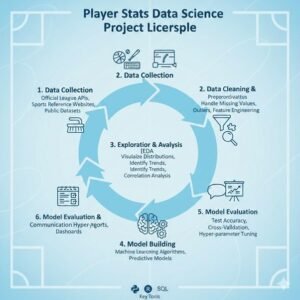
Infographic: The Data Science Project Lifecycle with Player Stats
The Future is Data-Driven: Why This Matters
The skills developed through these sports-focused data science projects are highly transferable and increasingly sought after across various industries. Companies are hungry for individuals who can collect, clean, analyze, and interpret complex datasets to drive business decisions. Whether it’s in finance, healthcare, marketing, or even in professional sports organizations themselves, the ability to extract actionable insights from data is a superpower.
For students who are passionate about both sports and technology, these projects offer a unique opportunity to combine their interests and build an impressive portfolio. And when the going gets tough, remember that expert assistance from seasoned assignment writers can provide the guidance needed to turn ambitious ideas into successful, well-researched projects.
Key Takeaways
- College students are actively using player statistics to undertake diverse and impactful data science projects.
- Projects range from predicting game outcomes and optimizing player performance to identifying talent and preventing injuries.
- Reliable data sources include official league websites, sports reference sites, and public datasets.
- Essential tools for these projects include Python/R, data visualization libraries, and databases.
- The skills gained are highly transferable and valuable across numerous industries.
FAQ
Q1: Do I need to be a sports fanatic to do a data science project with player stats?
A1: Not necessarily! While an interest in sports can certainly make the projects more engaging, the core skills you develop (data collection, cleaning, analysis, modeling, visualization) are universal to data science. You just need to be comfortable working with sports-related data.
Q2: What’s a good starting point for a beginner in sports data science?
A2: Start with a clear, focused question. Instead of “analyze NBA data,” try “can I predict if a team will win based on their free throw percentage in the last five games?” Begin with smaller, manageable datasets and focus on basic descriptive statistics and visualizations before diving into complex machine learning models. Kaggle often has beginner-friendly sports datasets.
Q3: Is it ethical to use publicly available player data for analysis?
A3: Generally, yes, as long as the data is truly public and you are not using it for commercial purposes without appropriate licensing or attribution. Most official league websites and sports reference sites make their data available for personal and educational use. Always double-check the terms of service for any data source you use.
Q4: How can I make my sports data science project stand out?
A4: Focus on originality in your question or approach, build a robust and accurate model, create compelling visualizations, and most importantly, clearly articulate your findings and their implications. Consider addressing a unique problem or using an advanced technique that’s less commonly seen. Building an interactive dashboard can also impress.


Bengals vs Cleveland Browns Match Player Stats: Complete Breakdown

New York Jets vs Bengals Match Player Stats: Complete Breakdown & Expert Insights

Pittsburgh Steelers vs Jacksonville Jaguars Match Player Stats: Complete Breakdown

Colts vs Chargers Match Player Stats Breakdown and Insights

Buffalo Bills vs Chicago Bears Match Player Stats: Complete Analysis

Miami Dolphins vs Detroit Lions Match Player Stats
-
 Sports2 months ago
Colts vs Chargers Match Player Stats Breakdown and Insights
-
 Sports2 months ago
Buffalo Bills vs Chicago Bears Match Player Stats: Complete Analysis
-
 Sports2 months ago
Miami Dolphins vs Detroit Lions Match Player Stats
-

 Entertainment1 month ago
Juwai Morning Teer Result Today Updates Guide
-

 Sports2 months ago
Las Vegas Raiders vs Minnesota Vikings Match Player Stats Explained
-

 Sports2 months ago
tampa bay buccaneers vs chargers match player stats
-

 Sports2 months ago
Green Bay Packers vs Indianapolis Colts Match Player Stats
-

 Sports2 months ago
Denver Broncos vs 49ers Match Player Stats: In-Depth Game Insight